I found an interesting site the other day: archive.org, they've got loads of public domain resources there, one of 'em is the excellent Hell's Angels, directed and produced by Howard Hughes. It's a rather special film because it was made during what's referred to as: the pre-code era. The code in question was the Hays Code and under its auspices, cinematic expression was quite severely restricted for several decades. As such I found watching the film, although entertaining, a somewhat sombre experience when considering the inferior melodrama that became prevalent under the code. Hell's Angles is a lively flick, its characters full of vitality and exuberance which is epitomised by the role played by Jean Harlow, who here is devastatingly alluring. Unfortunately, for me, her allure didn't survive the application of the code, weird eyebrows and the plaster manikin make up are poor proxies for the sensual grace she displays in Hell's Angels, just wait till you see her in that dress.
James Whale has a credit for staging which I infer is equivalent to sound stage director, meaning he directed the dialogue scenes. It's interesting to note that several dialogue scenes feature quite evident pauses, something that serves to underline dramatic tension. Overall the film is rather less stylised than is typical for the era and the interaction between the cast is quite subtle and full of detail. There's also plenty of high action in the film, most of which is rendered with real aircraft. So here it is, give it a go if you're interested.
Tuesday, 24 February 2015


Monday, 16 February 2015
I'll never forget Whats'isname (George Murcell)
You know those character actors whose name may have known but it escapes when you're trying to recall and you resort to referring to the person in question by a role or character type you associate them with, "You know the guy who played oily villains on The Saint and The Adventures of Robin Hood..."? That's happening to me all the time, so I've decided to record such notables on this blog, the first being George Murcell.
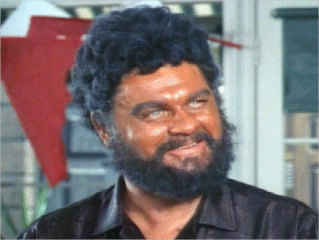 |
| George Murcell |
That capture is from an episode of The Champions apparently, not sure which one but Mr. Murcell seems to be in a slightly atypical role. A rather more congenial character than the surly protagonists leering with a lascivious menace at some heroine, that I remember him for.
Monday, 9 February 2015
A story behind the news.
After many decades since the publication of her only published novel to date, it's been announced that Harper Lee is to have a new novel published. A story which I'm sure you're familiar with but you might be scratching your head over a certain controversy surrounding this event A peculiar narrative has coalesced around the comments of some notable figures, that is: she's being taken advantage of by unscrupulous publishers. Kind of odd notion that isn't it but it's gained a certain currency amid the media coverage. I wonder why that should be, you might ask, if you're of a mind to ponder anomalous media output. Well allow me to explain, what's not being mentioned in the media, is a rumour that has been common currency in the literary world for many years. To put it baldly, this rumour concerns the speculation that To Kill A Mockingbird isn't entirely Lee's own work, rather it was written, or at least heavily edited by her friend, Truman Capote. You see, now things are starting to make sense aren't they? Indeed since it seems that the new novel is going to be based on Lee's original, recently rediscovered, draft for the work, you might be forgiven for entertaining the notion that the game is up, if you're of a mind to believe rumours that is.
Personally I'm have nothing invested in the veracity or otherwise of this rumour but it's always interesting to note the sophistry of those who are invested in such questions. Although Capote publicly denied the rumour, attacks on his personal integrity figure prominently, today we can't have recourse to crude allusions to his sexual proclivities, rather he's referenced as a person with an enormous ego and gift for self promotion, cos those are absolutely despicable attributes aren't they? I enjoy reading when the author utilises written word to offer an insight themselves or shed light on their own view of the world. The analysis of the prose in question, often presents a marvellous example of such insight: the voice is wrong for Capote, blah blah blah, yeah have these people done much actually reading, cos that seems incredibly naive? Such apparent naivety isn't born through inexperience though, it's the inevitable consequence that arises through attempting to impose a rounded narrative on events that are the subject of speculation rather than fact. Anyway I'm sure this story will rumble on to its deeply equivocal conclusion in the press.
Personally I'm have nothing invested in the veracity or otherwise of this rumour but it's always interesting to note the sophistry of those who are invested in such questions. Although Capote publicly denied the rumour, attacks on his personal integrity figure prominently, today we can't have recourse to crude allusions to his sexual proclivities, rather he's referenced as a person with an enormous ego and gift for self promotion, cos those are absolutely despicable attributes aren't they? I enjoy reading when the author utilises written word to offer an insight themselves or shed light on their own view of the world. The analysis of the prose in question, often presents a marvellous example of such insight: the voice is wrong for Capote, blah blah blah, yeah have these people done much actually reading, cos that seems incredibly naive? Such apparent naivety isn't born through inexperience though, it's the inevitable consequence that arises through attempting to impose a rounded narrative on events that are the subject of speculation rather than fact. Anyway I'm sure this story will rumble on to its deeply equivocal conclusion in the press.
Sunday, 11 January 2015
Kirby, in the act of drawing
I've only just bumped into this video a couple of days ago and I've just watched through it the once. Jack "King" Kirby is seen executing a now quite well known character drawing, that of Doctor Doom behind the mask. It's interesting for a number of reasons, the weight of line he achieves while ,I believe, not pausing to hone his pencil, probably because he's using a clutch pencil and the scale at which he's working. He's also got a mobile arm but that I mean he doesn't tilt the paper much to orientate his line work, that's something pros pick up after a lot of practice. Clutch pencils are a boon to the pro, I myself didn't cotton on to them for a while, once I did, my productivity increased by about a 1/3 so it's no surprise that's what Kirby should be using.
There's a still of an ink rendering of this drawing at the end of this video, it's quite a small image but it does seem a nice job, even so, it's possible to discern some quite noticeable differences between Mike Royer's sublime ink job of the same drawing, a nice illustration of the importance of inking.
Thursday, 11 December 2014
Calendars
OK, I wanna know exactly what is going on with the calendars, because it's starting to get irritating. The requirements I impose for such items are modest: girls, beaches, not too many cloths, oh yeah and some way of reading the date. This is the second year I've blanked while shopping for the new calendar, everything was hunky dunky right up till 2013 then all I see is footballers with their shirts off, bloody kittens and the kind of landscapes they hang on the walls of mental institutions. What happened, the cute girls go on strike or something? If you have a clue, please let me know.
But soft, what light through yonder window breaks?
Let's talk about grammar--only kidding, I'm not really a grammar fiend, not only am I not qualified to opine with even a modest authority on the subject, I just aint bothered about it that much. Yeah some things do get up my nose, I've just read a newspaper report with a [sic] inserted into a verbal quote, at least it's a fine demonstration of irony I suppose, we don't expect a great deal beyond the supercilious from our newspapers anyway. No, I just wanted to come out as having a bit of a Shakespeare bug and it think it was probably the lines, from act ii, scene ii of Romeo and Juliet that were responsible. George Sewell it was who recited them, not most people's idea of a Romeo type I would imagine but he was using them out of context in an episode of UFO, the 70's sf tv series. It's weird really, that a snippet inserted by a script writer to indicate a character's quaint foible, should spark such an interest. Of course being at rather tender age, nine or ten probably, and in the days before the internet, the efforts expended to track down the source of this quote, where limited to, "Where does this come from dad?". Fortunately, the Secondary Modern, at which my educational prospects were languishing, was transitioning to a Comprehensive. The early days of that social experiment saw the English curriculum elevated from, this is how you use a Biro, to a more aspirational level that encompassed some literary classics, which in my case included Romeo and Juliet.
In case you're not aware, Romeo and Juliet is considered: starter Shakespeare, light enough to be digested by young minds. To a certain degree this is quite apt, it does lack some of the classical references of other works and its rather less convoluted than something like Macbeth, which suffers a bit form being a teensy bit labyrinthine. One reason why Romeo Juliet might be a bit lighter in tone, is that it probably wasn't actually written by Shakespeare. It only appears in quarto and it's more or less universally acknowledged that the first quarto edition is reconstructed from memory, probably by actors who performed it. Later editions do embellish on this, quite a lot as it happens but there's a temptation to be suspicious over the authorship of those embellishments. This doesn't necessarily mean that you should view the work as something inferior to, real Shakespeare, because the text of the work actually benefits in some aspects. There's a quality of consensus about the work, a certain degree of erosion yes, but erosion that has come about through familiarity and the fondness you feel for that old chair, you should have thrown out long ago but it's too comfortable to discard. Yes, it is something of a melodrama but it's not completely without depth and you should remind yourself that it was intended to be light, even comic, depending on interpretation. The text benefits from this levity too, there's more room for some slightly frivolous wordage, a little bit of showing off without too much portent or meaning.
So I have something of an affinity with opening of act ii scene ii, it's probably this affinity that has spawned a certain dissatisfaction with most performances. It's unfortunate really that this scene is such a touchstone for Shakespeare, Romeo's opening words are the prelude, to what's regarded as Juliet's iconic, "...wherefore art thou...". Consequently, actors being actors like to throw their effort into leaving their mark on it. That's not really what should be happening, the previous scene, with its ribald allusion to medlars and graphic references to certain anatomical details (I think it's the 1st quarto edition, that remains un-bowdlerised), begs for contrast. Romeo doesn't have to do much, except look pretty and remember the lines, perhaps a good voice helps too but the words should do most of the work for him.
The other problem with performances of the scene is the opening line, "He jests at scars that never felt a wound". OK I understand it's metaphorical but the meaning is pretty clear, if not explicit, scars that never felt a wound aren't really scars at all are they? Yet there's this is in insistence on interpreting the line as: he jests at scars, yet never felt a wound, which is stupid. Let me explain why it's stupid, the previous scene shows Romeo's kinsman Benvolio and their friend Mercutio, searching for him after he's gone missing from the party they gate crashed. During the search they engage in lots of teasing, as they call out for their missing compatriot, over his infatuation with Rosaline, which unbeknownst to them, he's already moved on from. During the first act, Romeo portrayal as an effete youth indulging in self obsession through his romantic focus on a woman he cannot win approaches dramatic irony, as he mills around thinking he's the first man in the world to suffer an unreciprocated attraction. This narrative introduces a certain tension between Romeo and his peers, who perceive his relationship as the audience might, as a trivial youthful episode and it's this tension that is played out in scene i. So--when Romeo acknowledges his own folly, "...scars that never felt a wound" not only does that indicate a process of maturation, it also indicates an easing of the tensions between them, because he's vindicating their view of his behaviour. In the context of the scene about to unfold, this narrative makes a whole lot more sense than the one presented by the idiot seen petulantly proclaiming his wounds are still smarting.
I can see that, the last paragraph seems a bit of a rant, I don't really feel that I want to prescribe how a scene should be interpreted though, just expressing some incredulity at how some interpretations are arrived at. Anyway, lets have a look at Romeos opening soliloquy from the scene:-
But, soft! what light through yonder window breaks?
It is the east, and Juliet is the sun.
Arise, fair sun, and kill the envious moon,
Who is already sick and pale with grief,
That thou her maid art far more fair than she:
Be not her maid, since she is envious;
Her vestal livery is but sick and green
And none but fools do wear it; cast it off.
It is my lady, O, it is my love!
O, that she knew she were!
She speaks yet she says nothing: what of that?
Her eye discourses; I will answer it.
I am too bold, 'tis not to me she speaks:
Two of the fairest stars in all the heaven,
Having some business, do entreat her eyes
To twinkle in their spheres till they return.
What if her eyes were there, they in her head?
The brightness of her cheek would shame those stars,
As daylight doth a lamp; her eyes in heaven
Would through the airy region stream so bright
That birds would sing and think it were not night.
See, how she leans her cheek upon her hand!
O, that I were a glove upon that hand,
That I might touch that cheek!
Some wordy gorgeousness there but it's not just piffle, fodder for Thespians to memorise and impress the ladies with. There's meaning in there, it's not the kind of profound meaning that'll reveal the meaning of life to you, it's meaning within the context of the broader narrative.
The line: "It is my lady, O, it is my love!" is interesting, have a look at the next line, "O, that she knew she were", it's short by five syllables. That short line is out of place in this position, that wouldn't be the case if this line came just before, "Two of the fairest stars..." but here it's a bit of a hiccup. I've speculated that the reason for this is that the previous line has been edited or rather amended, through iteration or a failing memory perhaps and that line should read: "It is my lady, O, that she knew she were!". Incidentally, the first quarto omits this portion of the soliloquy entirely. The themes within this soliloquy are balanced, or thrown into contrast if you prefer that analogy, that's a common Shakespeare trait. Look at the choice of words, arise juxtaposed with kill, vestal livery described as sick and green. Its also balanced in a temporal sense, split into two clearly delineated stanzas, if you'd care to think of it as a poem but I think it's obvious, the dramatic pause follows "...'tis not to me she speaks". After which Romeo bashes out a rather quaint and slightly awkward analogue, drawing comparison between Juliet's beauty and the night sky. I imagine this quaintness is what prompts its omission in some performances: huge mistake, it's this property, the slightly flowery musings of vain youth that marks the start of Romeo's transition and it probably presents a, usually overlooked, opportunity to introduce some levity into the scene.
I tell you what, just for fun, lets have a look at the first quarto edition version of this soliloquy, which runs from page 19-20. This time I'll include the opening line of the scene. The long s is rendered as a lower case f in the copy, as it is here:-
He iefts at fcars that never felt a wound
...
But foft, what light through yonder window breakef?
It is the Eaft and Iuliet is the Sunne.
Arife faire Sunne, and kill the enuious Moone.
That is alreadie ficke and pale with griefe:
That thou her maid, art far more faire than fhe.
Be not her maide, finfe fhe is enuious,
Her veftali livery is but pale and green,
And none but fools doe weare it, caft it off.
She fpeafes but fhe fayes nothing. What of that?
Her Eye difcourfeth, I will anfwer it.
I am to bold, tis not to me fhe fpeakes,
Two of the faireft ftarres in all the skies,
Hauing some bufines, doe entreat her eyes
To twinckle in their fphears till they return.
What if her eyes were there, they in her head,
The Brightnes of her cheekes would fame thofe ftars:
As day-light doth a Lampe, her eyes in heauen
Would through the airie region ftreame fo bright,
That birdes would fing, and think it were not night.
Oh now fhe leanes her cheekes vpon her hand,
I would I were the gloue to that fame hand,
That I might kiff that checke.
It's a little different to the standard text isn't it? My Shakespeare bug is an occasional one, Shakespeare veneration throws up a couple of obstacles for casual interest, he's surrounded by all the huff and puff the pseuds can muster, consequently it's easy for a mortal to be put off by the subject. His familiarity can also pose a problem, I recall after a peformance of A Midsummer Night's Dream in Stratford, which was absolutly brilliant and well appreciated by the audience, I retreated to a pub with my companion. We happened upon a couple approaching retirement age, it became apparent quickly that they were buffs of the bard. Of course we enthused over our night of entertainment at the theatre, Oh how the easy delight of the hoi polloi must have twinkled in our eyes for them. My companion found it hard to reconcile their mildly disparaging commentary as we retreated from their company, quite quickly. I was just a little more tuned into the vibe, I told him that they'd probably been to dozens of plays from all over the place, experts such as them, would be a bit harder to please. "But they haven't even seen it!" he protested, say no more.
In case you're not aware, Romeo and Juliet is considered: starter Shakespeare, light enough to be digested by young minds. To a certain degree this is quite apt, it does lack some of the classical references of other works and its rather less convoluted than something like Macbeth, which suffers a bit form being a teensy bit labyrinthine. One reason why Romeo Juliet might be a bit lighter in tone, is that it probably wasn't actually written by Shakespeare. It only appears in quarto and it's more or less universally acknowledged that the first quarto edition is reconstructed from memory, probably by actors who performed it. Later editions do embellish on this, quite a lot as it happens but there's a temptation to be suspicious over the authorship of those embellishments. This doesn't necessarily mean that you should view the work as something inferior to, real Shakespeare, because the text of the work actually benefits in some aspects. There's a quality of consensus about the work, a certain degree of erosion yes, but erosion that has come about through familiarity and the fondness you feel for that old chair, you should have thrown out long ago but it's too comfortable to discard. Yes, it is something of a melodrama but it's not completely without depth and you should remind yourself that it was intended to be light, even comic, depending on interpretation. The text benefits from this levity too, there's more room for some slightly frivolous wordage, a little bit of showing off without too much portent or meaning.
So I have something of an affinity with opening of act ii scene ii, it's probably this affinity that has spawned a certain dissatisfaction with most performances. It's unfortunate really that this scene is such a touchstone for Shakespeare, Romeo's opening words are the prelude, to what's regarded as Juliet's iconic, "...wherefore art thou...". Consequently, actors being actors like to throw their effort into leaving their mark on it. That's not really what should be happening, the previous scene, with its ribald allusion to medlars and graphic references to certain anatomical details (I think it's the 1st quarto edition, that remains un-bowdlerised), begs for contrast. Romeo doesn't have to do much, except look pretty and remember the lines, perhaps a good voice helps too but the words should do most of the work for him.
The other problem with performances of the scene is the opening line, "He jests at scars that never felt a wound". OK I understand it's metaphorical but the meaning is pretty clear, if not explicit, scars that never felt a wound aren't really scars at all are they? Yet there's this is in insistence on interpreting the line as: he jests at scars, yet never felt a wound, which is stupid. Let me explain why it's stupid, the previous scene shows Romeo's kinsman Benvolio and their friend Mercutio, searching for him after he's gone missing from the party they gate crashed. During the search they engage in lots of teasing, as they call out for their missing compatriot, over his infatuation with Rosaline, which unbeknownst to them, he's already moved on from. During the first act, Romeo portrayal as an effete youth indulging in self obsession through his romantic focus on a woman he cannot win approaches dramatic irony, as he mills around thinking he's the first man in the world to suffer an unreciprocated attraction. This narrative introduces a certain tension between Romeo and his peers, who perceive his relationship as the audience might, as a trivial youthful episode and it's this tension that is played out in scene i. So--when Romeo acknowledges his own folly, "...scars that never felt a wound" not only does that indicate a process of maturation, it also indicates an easing of the tensions between them, because he's vindicating their view of his behaviour. In the context of the scene about to unfold, this narrative makes a whole lot more sense than the one presented by the idiot seen petulantly proclaiming his wounds are still smarting.
I can see that, the last paragraph seems a bit of a rant, I don't really feel that I want to prescribe how a scene should be interpreted though, just expressing some incredulity at how some interpretations are arrived at. Anyway, lets have a look at Romeos opening soliloquy from the scene:-
-*-
But, soft! what light through yonder window breaks?
It is the east, and Juliet is the sun.
Arise, fair sun, and kill the envious moon,
Who is already sick and pale with grief,
That thou her maid art far more fair than she:
Be not her maid, since she is envious;
Her vestal livery is but sick and green
And none but fools do wear it; cast it off.
It is my lady, O, it is my love!
O, that she knew she were!
She speaks yet she says nothing: what of that?
Her eye discourses; I will answer it.
I am too bold, 'tis not to me she speaks:
Two of the fairest stars in all the heaven,
Having some business, do entreat her eyes
To twinkle in their spheres till they return.
What if her eyes were there, they in her head?
The brightness of her cheek would shame those stars,
As daylight doth a lamp; her eyes in heaven
Would through the airy region stream so bright
That birds would sing and think it were not night.
See, how she leans her cheek upon her hand!
O, that I were a glove upon that hand,
That I might touch that cheek!
-*-
Some wordy gorgeousness there but it's not just piffle, fodder for Thespians to memorise and impress the ladies with. There's meaning in there, it's not the kind of profound meaning that'll reveal the meaning of life to you, it's meaning within the context of the broader narrative.
The line: "It is my lady, O, it is my love!" is interesting, have a look at the next line, "O, that she knew she were", it's short by five syllables. That short line is out of place in this position, that wouldn't be the case if this line came just before, "Two of the fairest stars..." but here it's a bit of a hiccup. I've speculated that the reason for this is that the previous line has been edited or rather amended, through iteration or a failing memory perhaps and that line should read: "It is my lady, O, that she knew she were!". Incidentally, the first quarto omits this portion of the soliloquy entirely. The themes within this soliloquy are balanced, or thrown into contrast if you prefer that analogy, that's a common Shakespeare trait. Look at the choice of words, arise juxtaposed with kill, vestal livery described as sick and green. Its also balanced in a temporal sense, split into two clearly delineated stanzas, if you'd care to think of it as a poem but I think it's obvious, the dramatic pause follows "...'tis not to me she speaks". After which Romeo bashes out a rather quaint and slightly awkward analogue, drawing comparison between Juliet's beauty and the night sky. I imagine this quaintness is what prompts its omission in some performances: huge mistake, it's this property, the slightly flowery musings of vain youth that marks the start of Romeo's transition and it probably presents a, usually overlooked, opportunity to introduce some levity into the scene.
I tell you what, just for fun, lets have a look at the first quarto edition version of this soliloquy, which runs from page 19-20. This time I'll include the opening line of the scene. The long s is rendered as a lower case f in the copy, as it is here:-
He iefts at fcars that never felt a wound
...
But foft, what light through yonder window breakef?
It is the Eaft and Iuliet is the Sunne.
Arife faire Sunne, and kill the enuious Moone.
That is alreadie ficke and pale with griefe:
That thou her maid, art far more faire than fhe.
Be not her maide, finfe fhe is enuious,
Her veftali livery is but pale and green,
And none but fools doe weare it, caft it off.
She fpeafes but fhe fayes nothing. What of that?
Her Eye difcourfeth, I will anfwer it.
I am to bold, tis not to me fhe fpeakes,
Two of the faireft ftarres in all the skies,
Hauing some bufines, doe entreat her eyes
To twinckle in their fphears till they return.
What if her eyes were there, they in her head,
The Brightnes of her cheekes would fame thofe ftars:
As day-light doth a Lampe, her eyes in heauen
Would through the airie region ftreame fo bright,
That birdes would fing, and think it were not night.
Oh now fhe leanes her cheekes vpon her hand,
I would I were the gloue to that fame hand,
That I might kiff that checke.
-*-
It's a little different to the standard text isn't it? My Shakespeare bug is an occasional one, Shakespeare veneration throws up a couple of obstacles for casual interest, he's surrounded by all the huff and puff the pseuds can muster, consequently it's easy for a mortal to be put off by the subject. His familiarity can also pose a problem, I recall after a peformance of A Midsummer Night's Dream in Stratford, which was absolutly brilliant and well appreciated by the audience, I retreated to a pub with my companion. We happened upon a couple approaching retirement age, it became apparent quickly that they were buffs of the bard. Of course we enthused over our night of entertainment at the theatre, Oh how the easy delight of the hoi polloi must have twinkled in our eyes for them. My companion found it hard to reconcile their mildly disparaging commentary as we retreated from their company, quite quickly. I was just a little more tuned into the vibe, I told him that they'd probably been to dozens of plays from all over the place, experts such as them, would be a bit harder to please. "But they haven't even seen it!" he protested, say no more.
Sunday, 23 November 2014
The wave
The surly depths can conjure up that which we, even in our most concietful imaginings, would baulk at, with our carefully acquired hoard of ridicule and a pittance of spite we labour to, not quite, quell the urgings of doubt. The drama, comedy and tragedy of human life rolls along the well beaten path someone dies, another is born we spend the time lying, stealing--murdering, If I met an honest man I wouldn't know his name but he probably lost it, face down in a ditch. Then something like the wave happens, in this place so dense with miracle and catastrophe, you would've thought we'd learned some lessons regarding the unanticipated. That's not the case it seems, for even with the days that rain meat and kerosene in New York to remind us, the butterflies beat their wings unheeded.
'What was it like before the wave?', she asks, as if it was an ordinary question, what's your favourite colour, how many people are in the world, what is Father Christmas bringing me for Christmas?
Startled, I do my best to satisfy her curiosity, 'It was different--people were different--er no, people were the same, it's just that...'.
'You didn't know about the wave did you?'.
Such candour concerning the wave seems incongruous, I'm embarrassed, it's as if she asked me to explain birds and bees to her while we were under public gaze. 'No--I didn't--but some others... well they didn't exactly know about it, they...'. She's pouting now, the pinkness of her lips turning pale under the pressure of frustration. 'It's hard to explain sweetheart, it's like when you first went to school, you'd never been inside one before had you?'.
'No Daddy, I hadn't'.
'No sweetheart, that's rhetorical, you're not supposed to answer those kind of questions'.
'Sorry daddy'.
'It's not necessary to apologize sweetheart, not for those kind of mistakes'. As she falls silent for a few seconds, I allow myself to believe I've diverted her inquisition but the tension on her brow belies the motion of thought beneath.
'Sometimes... people make very big mistakes--ones they should apologise for--don't they daddy?'. As the light catches her eyes fixed upon mine, I see a hint of heterochromia amongst the the green I once thought as uniform as the deep of the sea. Fugitive splinters of light, the tell tales of horse mackerel evading predators.
'Yes, sweetheart'.
'That's OK daddy--it was rhetorical'.
-*-
'What was it like before the wave?', she asks, as if it was an ordinary question, what's your favourite colour, how many people are in the world, what is Father Christmas bringing me for Christmas?
Startled, I do my best to satisfy her curiosity, 'It was different--people were different--er no, people were the same, it's just that...'.
'You didn't know about the wave did you?'.
Such candour concerning the wave seems incongruous, I'm embarrassed, it's as if she asked me to explain birds and bees to her while we were under public gaze. 'No--I didn't--but some others... well they didn't exactly know about it, they...'. She's pouting now, the pinkness of her lips turning pale under the pressure of frustration. 'It's hard to explain sweetheart, it's like when you first went to school, you'd never been inside one before had you?'.
'No Daddy, I hadn't'.
'No sweetheart, that's rhetorical, you're not supposed to answer those kind of questions'.
'Sorry daddy'.
'It's not necessary to apologize sweetheart, not for those kind of mistakes'. As she falls silent for a few seconds, I allow myself to believe I've diverted her inquisition but the tension on her brow belies the motion of thought beneath.
'Sometimes... people make very big mistakes--ones they should apologise for--don't they daddy?'. As the light catches her eyes fixed upon mine, I see a hint of heterochromia amongst the the green I once thought as uniform as the deep of the sea. Fugitive splinters of light, the tell tales of horse mackerel evading predators.
'Yes, sweetheart'.
'That's OK daddy--it was rhetorical'.
Subscribe to:
Posts (Atom)